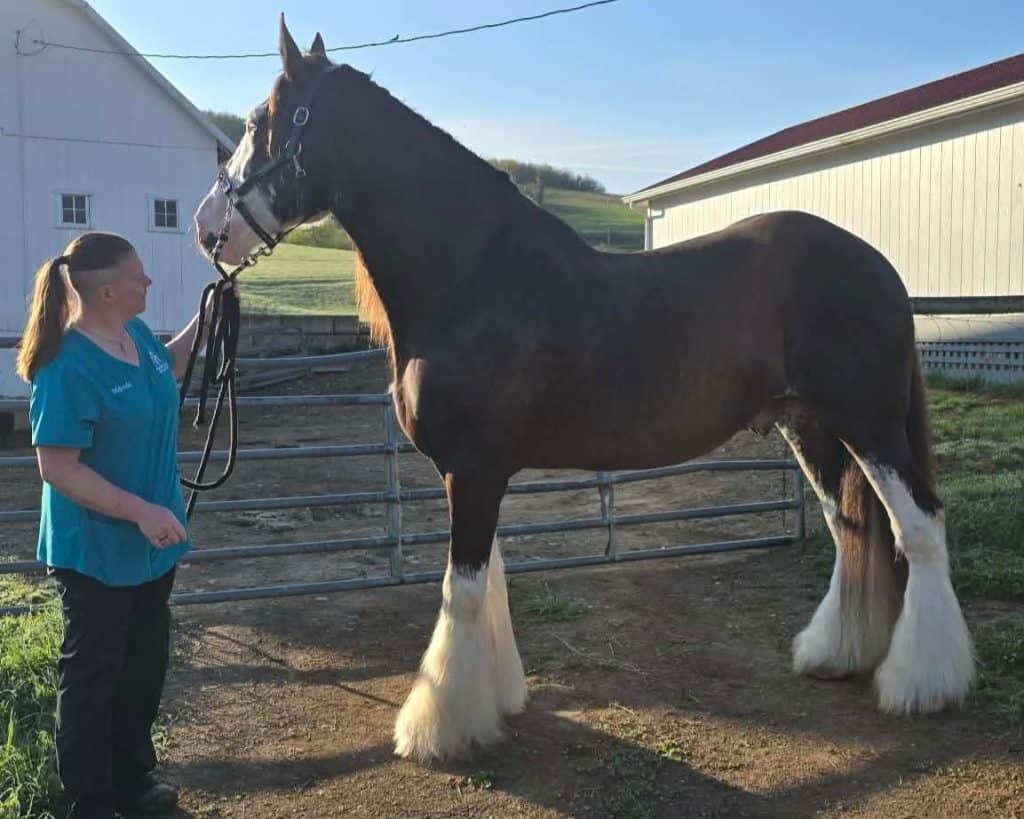
The Clydesdale is a large drafthorse breed, with individuals standing between 16.2-18 hands at the shoulder – that’s 66-72″! The history of the breed goes back to the 1700s, and they were first brought to America in the 1840s. The Anheuser Busch Company of St. Louis, Missouri was critical to the survival of the breed in the 1950s and 1960s. Clydesdales are a well-known but uncommon breed, with fewer than 5,000 individuals registered globally. Our Clydesdale Gates, pictured above, came to us from Walt Disney World, where drafthorses are used during parades and other events.
Donkeys
Mini Mediterranean Donkey
Status: Watch
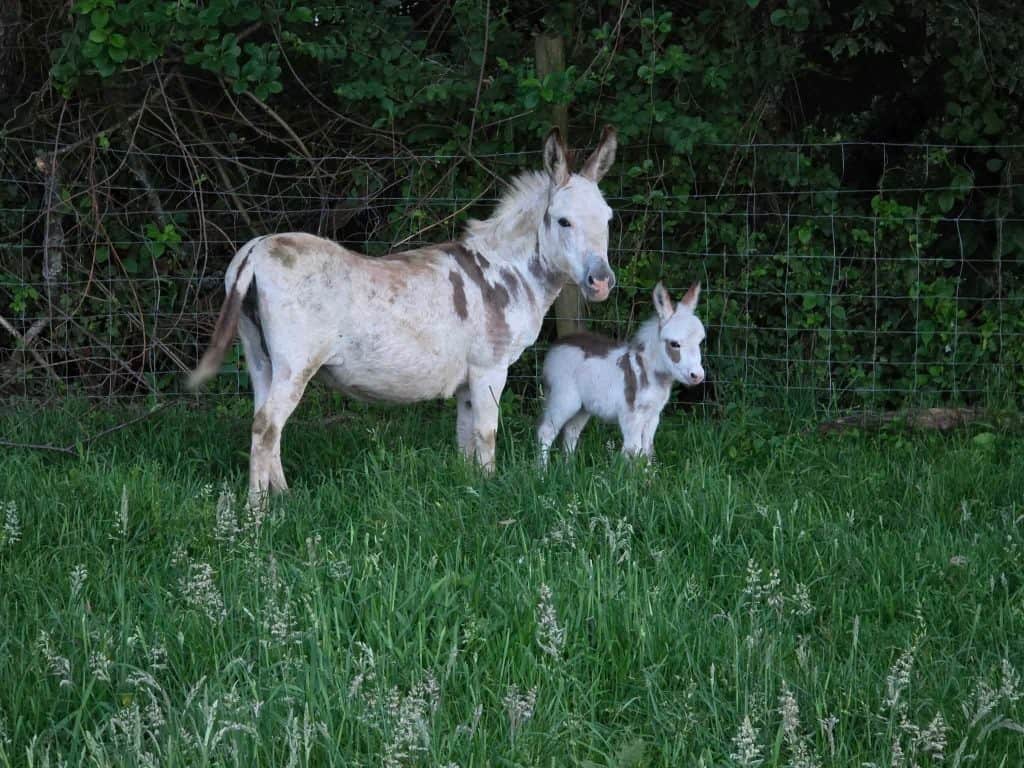
Miniature donkeys first came to American in the 1920s, when seven Sardinian donkeys were imported by a New York stockbroker. Their numbers remained relatively small until the late 20th century, with the formation of the National Miniature Donkey Association in 1990. Their small size and curious nature has made the Miniature Donkey into a popular pet, especially for children. North America now boasts 10,000-15,000 individual donkeys, but their numbers are declining in their ancestral homes on the Mediterranean Sea. For that reason, it is important that North American breeders continue to conserve the genetic material of the breed.
Cattle
American Milking Devon
Status: Critical
The plight of the American Milking Devon was the reason behind the formation of the American Livestock Conservancy. Pilgrims originally brought the breed to New England from their ancestral home in Devonshire, England, and over the centuries Milking Devons spread as far south as Florida, and into the west along the Oregon Trail. Beginning in the 1800s, the breed slowly began to be replaced by the Shorthorn, and by the 20th century many Milking Devons had been bred for beef production. A small subset of traditional Milking Devons raised for dairy production survived, and since the 1970s farmers have made a distinct effort to preserve this historic breed. Today, more than 500 indivual cattle are registered.